First lessons
What to Wear to Ballroom Dance Class: First-Lesson Checklist
Wear clothes you can move in and shoes with a smooth sole that stay on your feet. Here's how to pick from your closet and what to ask the studio first.
If you’re deciding what to wear to ballroom dance class, choose clothes you already own that let you move your arms and legs freely, and smooth-soled shoes that stay on your feet. Before buying dance shoes or dancewear, check your studio’s requirements. Some venues ban sneakers; others recommend bringing indoor shoes.
What to wear to your first class
Clothes you already own
What matters is how the clothes behave when you move:
- You can lift your arms and take a long step. Stiff jeans, a tight skirt or a fitted jacket can stop both. Stretch trousers, a skirt with some flare or a loose dress work.
- Nothing hangs or catches. Leave scarves and long necklaces off, and avoid sleeves that could catch on your partner.
- It isn’t too baggy or too warm. Clothes that aren’t overly baggy make it easier for an instructor to see your posture and footwork. A thin layer you can take off is easier to adjust than one thick sweater.
Slacks and a T-shirt or a simple dress can both work if they pass those checks. Keep long hems clear of the floor.
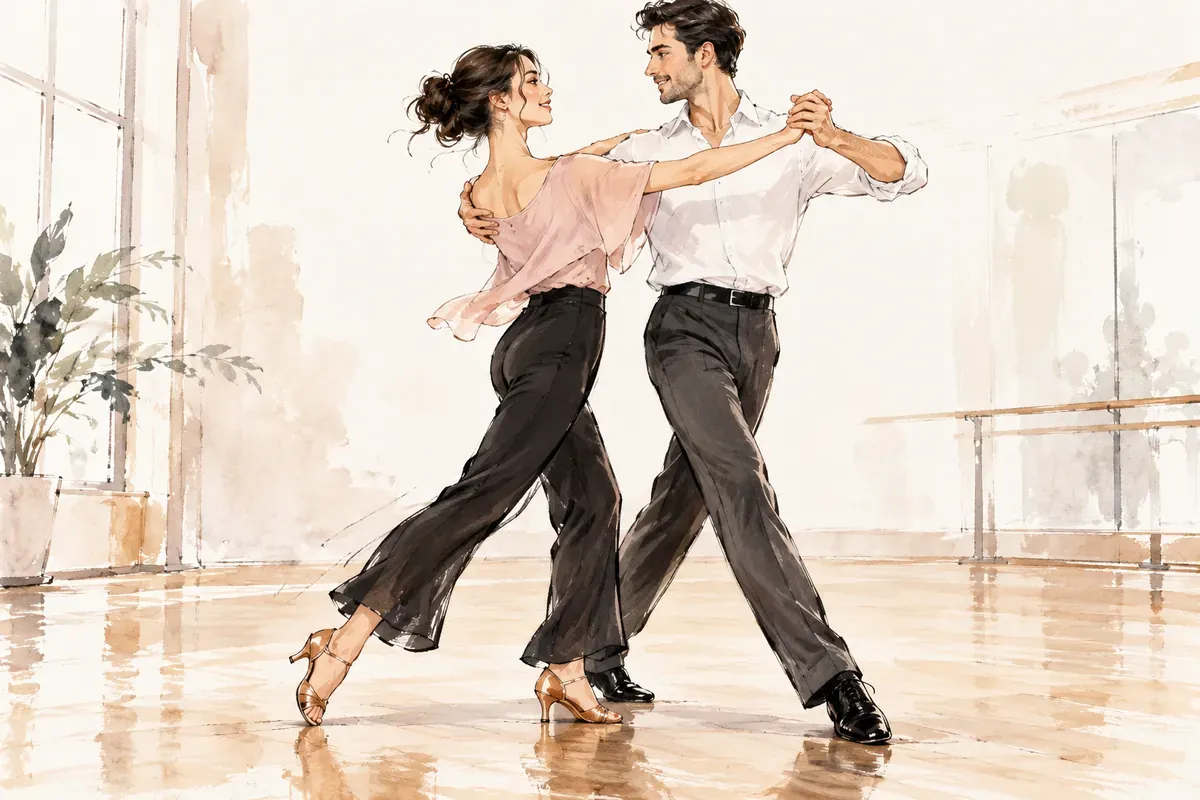
Shoes: ask about the floor first
Shoe advice for ballroom beginners looks contradictory because it mixes advice about the sole with each venue’s rules.
The sole needs to move on the floor. A sole that grips the floor can make turns harder. Arthur Murray’s advice is to wear something with a smooth sole that you can move in and to avoid sneakers with heavy treads. The word “sneaker” alone doesn’t tell you how much tread a shoe has.
The venue has its own floor rules. BallroomDanceCommunity.org’s class dress code says “No tennis shoes or sandals. Shoes should be non-scuffing.” Green Bay Ballroom recommends bringing indoor shoes to help protect its floor, and Revolution Ballroom in Beaufort, South Carolina, discourages ordinary high heels, though not ballroom dance heels, because they can damage its dance floor. Meanwhile the RPI Ballroom Club tells newcomers to its socials that socks or sneakers work just as well. These are local recommendations, so permission to wear sneakers at one venue doesn’t establish that they’re suitable everywhere.
Start with smooth-soled shoes you own, such as dress shoes, flats or low heels, that stay securely on your feet. Clean, low-tread sneakers are an option only if the studio approves that pair. Skip flip-flops, slides and backless shoes that could come off during a turn.
If you already own suede-soled dance shoes, carry them in a bag and put them on at the studio. Capezio, for example, says its suede-soled shoes are made for indoor use only, because outdoor exposure can quickly wear down the suede.
A five-item packing checklist
- The shoes you’ll dance in, in a bag if the studio wants indoor-only shoes, so you can change at the door.
- Water.
- A small towel. Partners hold hands, and dry hands are more pleasant for both of you.
- A spare top if you tend to sweat or are going somewhere after.
- Your booking details, and payment if the first lesson isn’t prepaid.
Leave bulky bags at home and put rings or watches with sharp edges in your bag.
Class, social and competition dress codes
A class outfit doesn’t have to meet a formal ball’s dress code. BallroomDanceCommunity.org distinguishes casual classes, dressy-casual practice parties and formals; its examples below are local expectations. Competition clothing follows the event’s own rules.
| Situation | Practical choice | What to confirm |
|---|---|---|
| Group class or first private lesson | Everyday clothes you can move in; smooth-soled shoes that stay on | Whether the class lists a dress code |
| Practice party or social dance | “Dressy casual” for BallroomDanceCommunity.org practice parties, with slacks or a dress preferred | Whether the event expects casual, dressy-casual or formal clothing |
| Formal ball | Dark suit and tie or tuxedo; long dress, cocktail dress or ball gown | The invitation’s dress line |
| Competition | Follow the event’s published clothing rules | The specific event’s dress rules; USA Dance Nationals, for example, directs entrants to the current USA Dance rulebook |
Questions to ask your studio
You can send these questions with your booking inquiry:
- Are street shoes allowed on the floor, or do I need a pair I don’t wear outside?
- Are my shoes suitable? Describe the sole and any heel, or send a photo.
- Is there a social or practice party after class, and does it have a different dress code?
- Is there anything I should bring to the first lesson?
For the next steps before you book, start from the Ballroom Dance Planet home page.
Found an error or something unclear? Send us the detail to check. Corrections are described in our editorial policy.